
I spent many years hiring and developing talent before I started coaching leaders. And one thing I noticed early on was that the most effective interviews I ran weren’t the structured ones. They were the ones that stopped feeling like interviews.
The structured interview questions are important. But more insights came later: in the walk to the parking lot, the offhand comment about why they left their last role, and the moment someone finally stopped performing and just talked to me as a person.
When we’re searching for advice on how to interview candidates, we often find a list of questions or a pragmatic approach. People first hiring takes a different approach, focusing on the whole person instead of just their résumé and references.
What People First Hiring Actually Means
Most interview processes are designed to assess whether someone can do the job. That’s not the wrong idea; it’s just a little incomplete.
When we’re hiring, we often think of it as a box to check. We post the listing, review applications, set up interviews, call references, and choose the best candidate. Many times, that’s someone who held the position before.
We need a chef, so we find a chef. We need an assistant manager, so we hire one. We get hung up on the résumé, the experience, the qualifications. And in doing so, we miss the actual person sitting across from us.
People First Hiring means shifting the interview’s entire posture. Instead of “Are you qualified?” the question becomes “Who are you, and could we actually work well together?”
Instead of evaluating a candidate, you’re having a conversation with a human being. Thinking this way changes everything that follows. It can even impact how long people stay, how hard they work, and how much they care.
The Busboy Who Changed How This Manager’s Approach to Interviews
I’ve been thinking about this a lot since my conversation with Jackie Carpenter on the Grown to Lead podcast. Jackie is the founder and Editor-in-Chief of Notable magazine. She’s also co-author of a book on people first leadership. Through her work, Jackie has developed a concept she calls “hiring from the heart,” and it crystallized something I’d believed for years.
Early in her career, Jackie and her husband were interviewing a teenager named Tyler for a busboy position at a country club. He bombed the interview. He was awkward, stilted, and clearly trying to say what he thought they wanted to hear.
Most managers would have thanked him and moved on. That’s what conventional interview tips for managers might say: Don’t waste your time.
Instead, they stopped the formal interview and just talked to him. They asked him what he found exciting about the club. And when he relaxed for a moment, he said, “It’s so beautiful here. I would just love it.” They kept going. Eventually Tyler told them that his father had recently passed away and he needed to be there for his family. He needed somewhere to belong, and somewhere to prove himself.
Tyler stayed for seven years. He grew into other roles. And the only reason they found any of that out was because two managers cared enough to look past the interview performance and find the person.
That’s the whole thing, right there. The interview isn’t a test the candidate needs to pass. It’s a conversation where you’re both figuring out whether this could work.
Interview Best Practices for Managers Who Want to Hire Well
Here’s what a people first approach to interviewing actually looks like in practice. These questions and qualities separate managers who build great teams from those who are always hiring.
Looking for a checklist instead?
Download your People First Hiring Checklist for your next interview. Browse manager interview questions to ask and answers to look out for. Grab the checklist by filling out the form below.
1. Ask about their story, not just their history
A résumé tells you where someone worked. It tells you almost nothing about why they left, what they valued, or what they’re actually looking for in their next role.
Start the conversation by asking about the choices that shaped them: what drew them to this field, which role they’ve enjoyed most and why, and what made them leave previous positions. You’re listening for the patterns beneath the polished answers. It’s not just about the content, but the person.
2. Uncover what brings out their best
One of the most useful things you can do in an interview is understand what managing this person will actually require. Ask them about the best and worst bosses they’ve ever had. Ask what brings out their best, and what they’re like on a bad day. Ask how they prefer to receive feedback.
These answers tell you far more than “Tell me about a time you demonstrated leadership.” And they give you a real picture of the working relationship before it begins.
3. Create room for honesty, not performance
Most candidates are performing in interviews. They’re giving you the version of themselves they think you want to see. Your job is to make it safe for them to stop.
One of my favorite interview questions for this is: “Where does this role rank from 1 to 10, if 10 is your dream job?” Then ask what it would need to become a 10. Ask what part of the opportunity they’re least excited about (this one is quite telling!). Finally, ask what might make this the wrong fit for them.
These questions create the kind of honest conversation where you can actually assess fit for both of you.
4. Ask about their values in real life, not in the abstract
Most candidates can recite your company values back to you if you ask whether they’re a fit. That’s mostly useless. Instead, ask how a specific value shows up in their real life. Ask about a time they had to act with integrity when it cost them something. Ask what integrity looks like when no one is watching, with real-world examples.
You’re hiring the behavior behind the belief, not just the ability to parrot back your core values.
5. See who they are outside of work
We talk about the importance of seeing the whole person when you’re interviewing, and not just the past experience. You might want to ask, what do they do outside of work? What are they proud of that would never appear on a job application?
These questions aren’t small talk. They’re how you understand what someone is made of, and whether that fits the culture you’re trying to build.
However, you should also know which questions not to ask during interviews that could lead to discrimination. This list of questions to avoid can help, though it’s always good to consult your legal team and HR.
6. Know what to listen for
Great employees often have certain qualities, including self-awareness and ownership. During the interview, look for language that shows a candidate taking accountability. Or, notice if they’re reflective of their own impact when speaking about the past — the good and bad.
You can also see what energizes candidates by how they light up when talking about certain strengths or roles. Conversely, pay attention to what frustrates or drains them to see whether your environment is a good fit.
The key is to notice patterns across answers, not just one-off responses.
If you want a practical resource for your next interview, I’ve put it all into a downloadable guide: The People First Interview Guide. It walks you through six areas to cover, from understanding a candidate’s story to having an honest conversation about fit, with specific interview questions for managers. Use it in your next interview and see what changes.
The Mistake That Costs You Before Day One
If there’s one thing to avoid as a manager who’s hiring, it’s false credibility. This happens when you make promises in the interview that you can’t keep. It can sound like, “We won’t ask you to work weekends,” or “We’ll work around your schedule.” It’s anything you say to get someone through the door that turns out not to be true.
This matters more than most managers realize, because trust is built or broken before someone even starts. Your reputation as a manager is always being written, from the initial interview and every day forward. You don’t always control how others perceive you as a manager. But you can control whether you tell the truth.
Why Employees Are Your Most Precious Resource
Some leaders see employees as interchangeable. If someone isn’t working, there’s always someone else. And for a long time, that was common enough to feel normal. Not anymore.
Many leaders now know that approach isn’t only time-consuming and disrespectful; it also weighs on your team, who are dealing with constant turnover and job uncertainty.
The people first framework flips that thinking. Employees aren’t your biggest cost center. They’re your biggest competitive advantage. Without people who care, every other investment in product, service, and customer experience is capped by what disengaged people can deliver. When people show up ready to give their best, when they’re creative, collaborative, and thinking like owners, the ripple effects are genuinely exponential.
And it all starts with who you hire and how you hire them. Don’t just think of the interview as an administrative step before the real work begins. It’s the foundation of every team you’ll ever build.
“Without people who care, every other investment in product, service, and customer experience is capped by what disengaged people can deliver.”
Where to Start
Our advice for new people managers is simple: dedicate the time to connect. It feels inefficient to step away from your inbox and the daily fire drills. However, the relationships are the work. The conversations are the strategy. Everything else is the downstream effect.
- Start with the next interview you run. Bring fewer scripted questions. Ask about the person, not the candidate. Listen for the patterns beneath the polished answers. And see what happens when the conversation stops feeling like an interview.
- Download The People First Interview Guide below to get started.
- If you want to hear Jackie’s full conversation on hiring with heart, her Grown to Lead episode is available wherever you listen to podcasts.
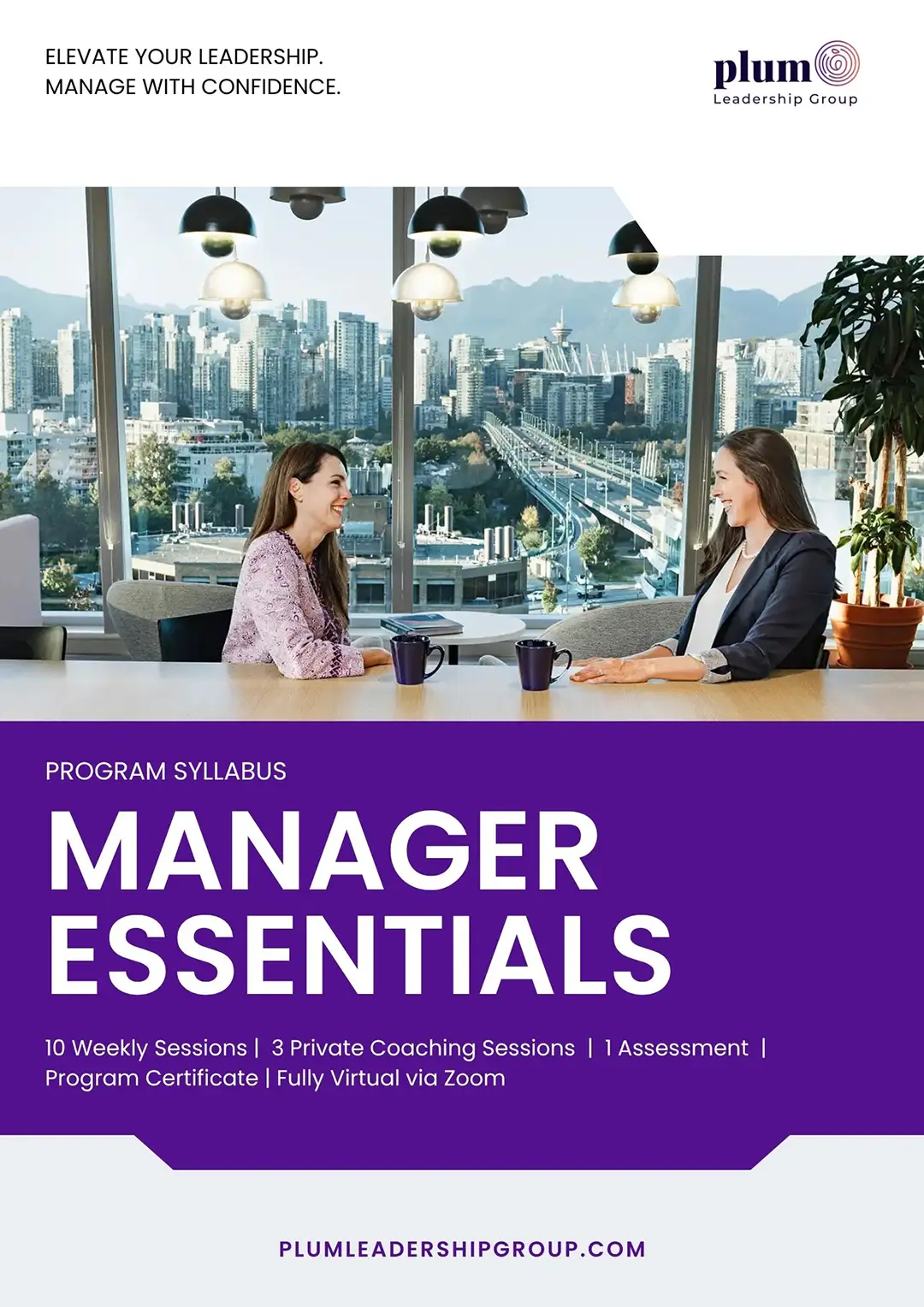
- If you’re a manager who wants to hire, develop, and keep great people, Manager Essentials is for you. It’s a ten-week virtual training program with 1:1 coaching and discussion-based cohorts. Reach out to learn more.
Disclaimer: This article is for informational purposes only and does not constitute legal advice. Always consult a qualified employment attorney in your area regarding hiring, interviewing, employment agreements, and personnel decisions.